Investing in volatile markets


“Be sure to put your feet in the right place, then stand firm.” Abraham Lincoln
Over the past few years, the world has fundamentally changed. We are living through a pivotal time in history having navigated a global pandemic, heightened geopolitical uncertainty, volatile financial markets, and witnessed the end of a 40-year period of declining interest rates.
Despite everything seeming radically different to what many of us may have experienced, it does, in fact, rhyme with the past, particularly the early 1960s. During that period, interest rates bottomed out after decades of decline and we witnessed the rise of the Cold War era. Sound familiar? While the narrative may not play out exactly the same, there are a number of lessons we can learn from historic data that will allow us to find the right place to plant our feet and stand firm while weathering the volatile conditions around us.
Perspective is everything
“We can complain because rose bushes have thorns or rejoice because thorns have roses.” Alphonse Karr
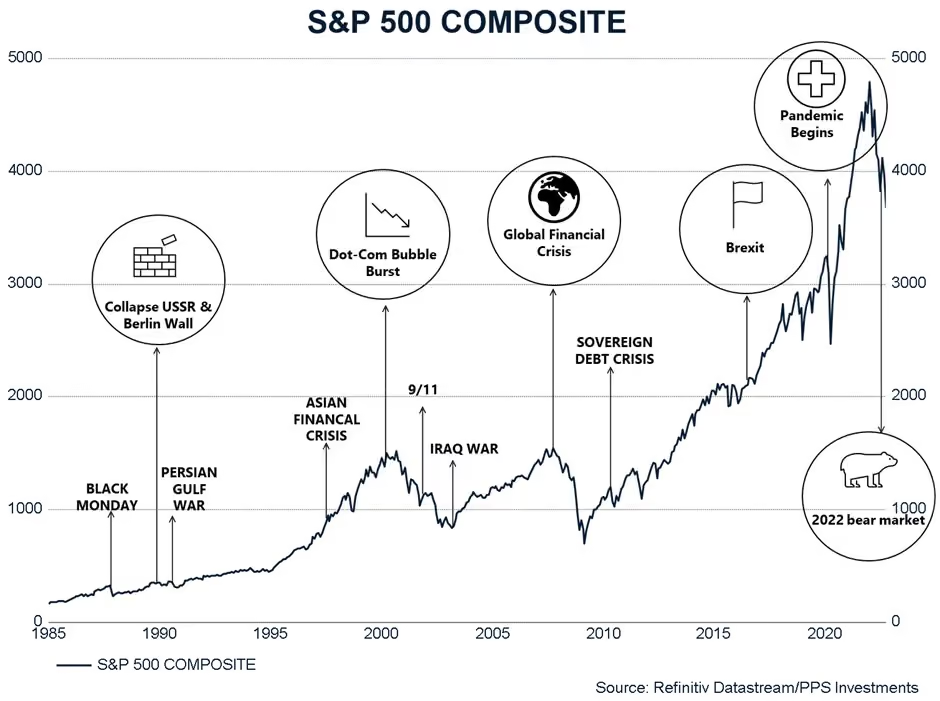
Market fluctuations are a natural part of investing. Witnessing short-term market movements can be unnerving, especially if the value of your investment is affected. The reality is that market corrections are inevitable, as we’ve seen during previous periods of uncertainty and market volatility. By way of example, when looking at the S&P 500 Composite Index since 1985 (Figure 1), there were several instances where the index entered into ‘bear market’ territory. Each disruption was different, but the common thread that runs through is that these downturns didn't last long. Apart from the pandemic-induced market downturn in 2020 that lasted all of 33 days (the shortest bear market in history), the average duration of a bear market is about one year. In other words, volatility has always given way to growth, usually in short order and over the long term, the trend of the market is always up.
Figure 1: S&P 500 Composite Index
Diversification is key to an ‘all-weather’ portfolio
“Always start at the end before you begin.” Robert Kiyosaki
In investing, diversification refers to combining a mix of asset classes that perform differently during different market cycles. By doing so, an investor helps to ensure some positive returns at any point in the cycle and minimise the impact of market fluctuations on their portfolios. A sensible and carefully considered mix of asset classes can determine the potential returns and swings in a portfolio. Selecting and blending a solid combination of asset classes is a fundamental part of investing and could be one of the determining factors in achieving the set investment objective. Although diversification is a staple of investing, as markets change a portfolio may need to evolve. Periods of volatility may present unique opportunities to add value to a portfolio in the short term, but these should be carefully considered against the long-term objectives of the portfolio.
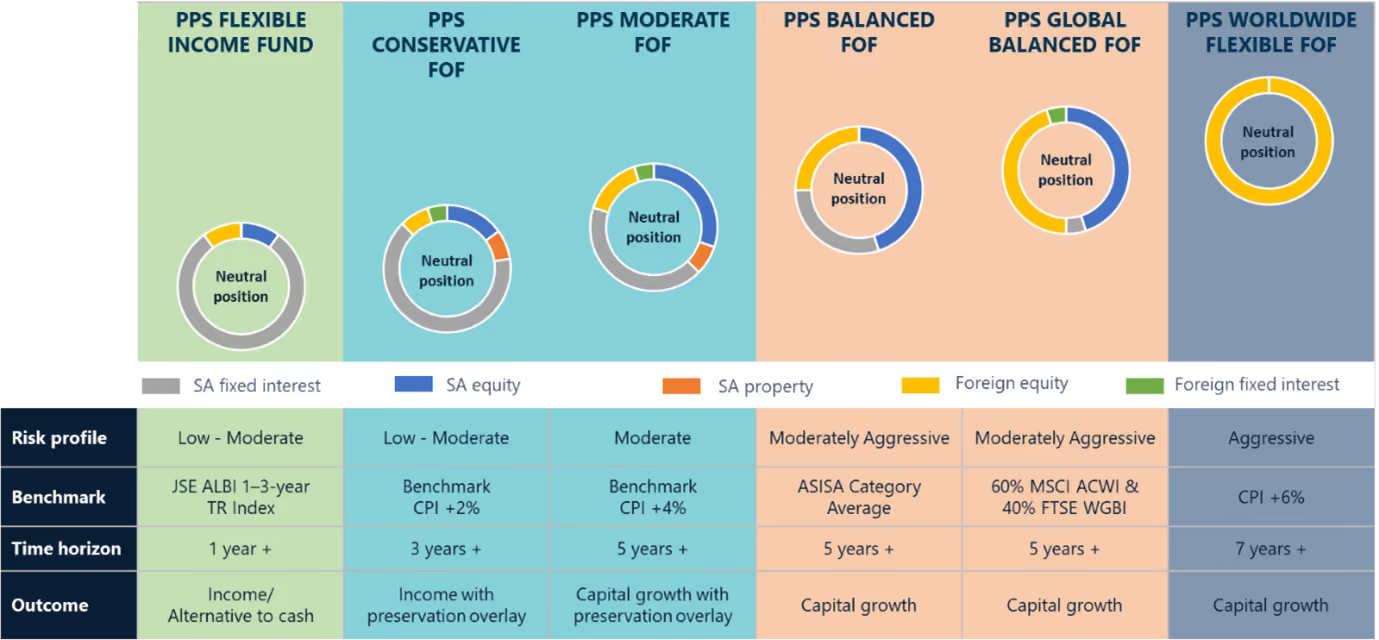
A financial adviser can assist in determining your risk profile and, in doing so, recommend the appropriate mix of asset classes that are most suitable to your situation by assessing your goals, time horizon and financial circumstances. Another option is to consider investment options with a multi-manager that offers a pre-packaged range of funds across the risk return spectrum (Figure 2).
Multi-managed funds are backed by a team of specialists who have screened the investment universe to include premium asset managers and blend those with complementary styles to help achieve certain investment objectives. Multi-managers also apply their optimal asset allocation expertise, which investors can access via the fund range, provided it is aligned to their risk profile, investment time horizon and set objective.
Figure 2 - PPS multi-managed solutions across the risk and return spectrum
Time in the market not timing the market
"Better three hours too soon than a minute too late." William Shakespeare
Volatility is a part of investing. But it allows investors to seek potentially higher returns that can help them meet their goals. While sudden and sharp market shocks can make it tempting to head to the side-lines, the downside is that an investor is more likely to lock in losses should they reinvest too late and miss the moment of recovery. Remaining invested in the market and resisting the temptation to try to time its ups and downs, makes more sense.
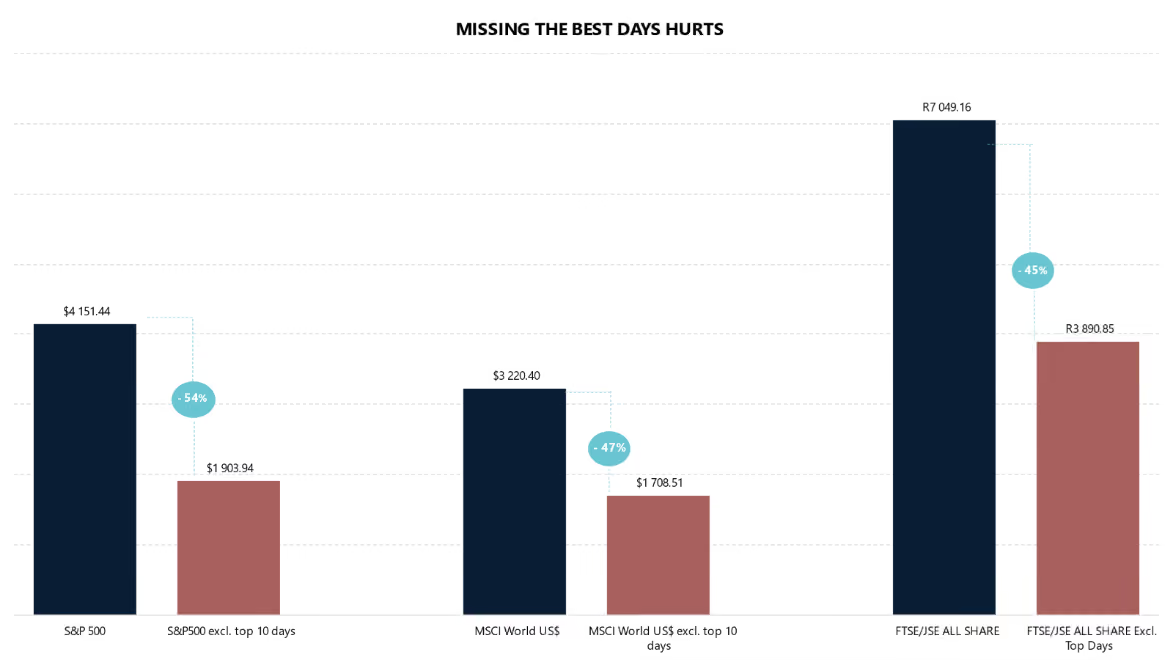
It can be difficult to catch up if an investor chooses to disinvest and then find themselves still on the side-lines during a recovery. To demonstrate the potential effect, let’s look at the impact of missing even a few of the best days in the market (Figure 3). As a proxy, we’ve used several large market indices, such as the S&P 500, the MSCI World and the JSE All Share. The effect of missing out on the top 10 days in each of the examples shows how it can significantly undermine performance. This illustrated that market gains are often made and lost in just a few trading days out of the entire year.
Figure 3 – Missing the best days hurts
Do well “on average”
Disinvesting can be a disadvantage to achieving long-term objectives. Remain invested and stay the course by sticking to your financial plan. When investing, taking the long-term view bodes well as one can actually benefit from a volatile market. This is possible through a time-proven investment technique called ‘rand cost averaging’, where an investor puts a set amount in each of their investments regularly, regardless of how the market is doing. Over the years, that set amount of money buys more units of each investment option when prices are low, and fewer when prices are high. As a result, the average price per share of the investments may be lower than if it had been invested all at once.
Fight fear with facts
2022 has been quite a volatile year thus far. But we’ve been here before. Market volatility comes in swings and roundabouts but brings about the potential for higher returns. Even though it can be unsettling for an investor, the best course of action is often inaction. Nobody can control the market, so it’s important to remain calm and stay committed to your long-term financial plan.
Always consult a financial adviser before making any decisions that could impact on your ability to reach your investment objective, as they’re best poised to help you navigate the challenging periods of market volatility.